What is a station wagon?
A station wagon is a car whose roof runs straight back to a rear tailgate over a long cargo area, instead of ending at a trunk lid. It is built on a sedan platform, so it drives like a car while carrying as much as a small SUV.
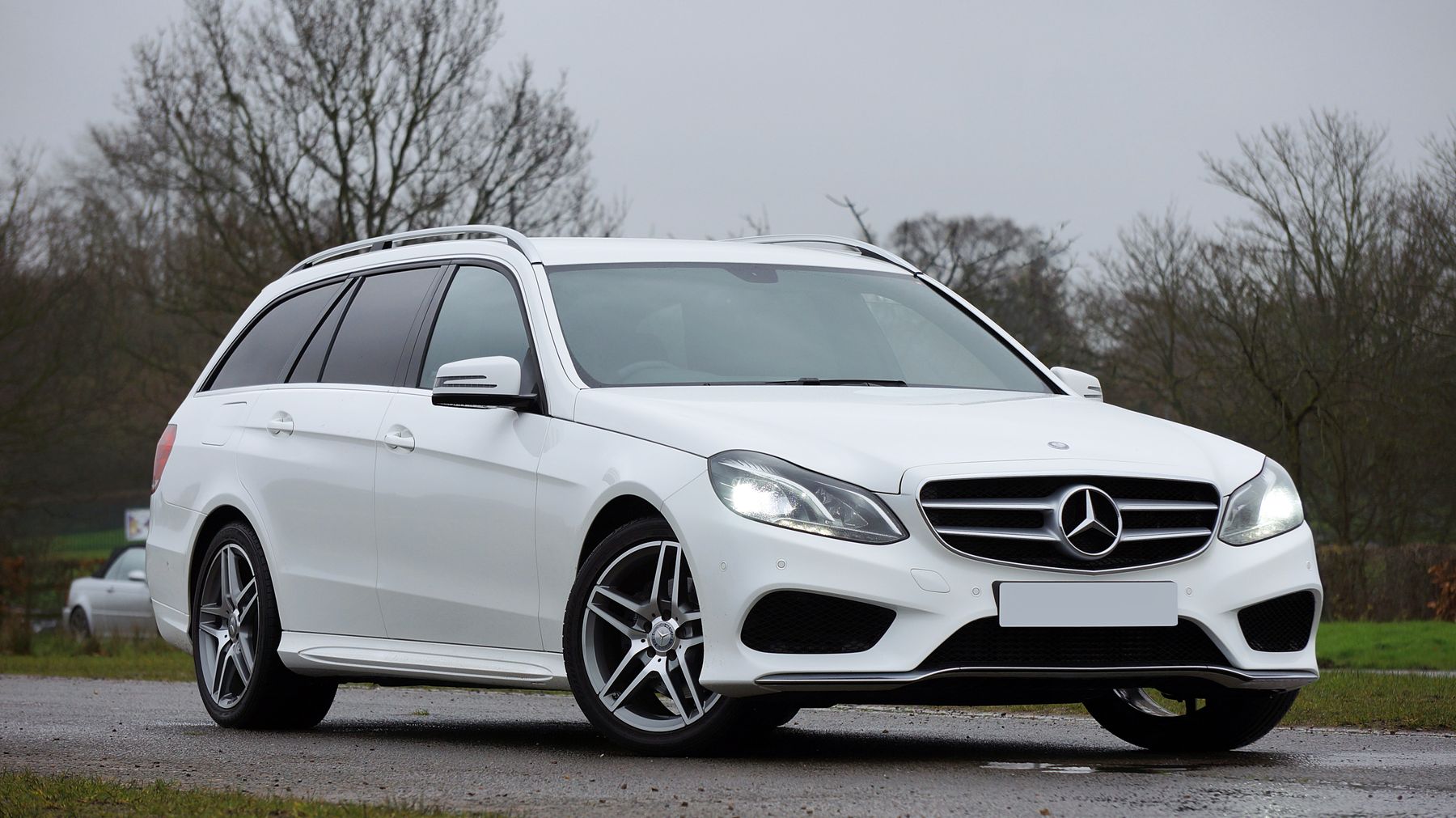
Key traits.
- A long roof carried back to a near-vertical tailgate.
- An extra window pillar behind the rear doors (the D-pillar), which is how you spot a wagon.
- A long, flat cargo floor that grows when the rear seats fold; midsize wagons often open to 60 cubic feet or more.
- Sedan driving manners: a low center of gravity and a car's handling and efficiency.
- Roof rails on most wagons, for bikes, skis, and cargo boxes.
Kinds of wagons.
| Kind | What it is | Examples |
|---|---|---|
| Wagon | The standard version of a sedan's wagon body | Mercedes-Benz E-Class and BMW 3 Series Touring in many markets outside the US |
| Lifted wagon | More ground clearance, all-wheel drive, and body cladding | Audi A6 allroad, Mercedes-Benz E 450 4MATIC All-Terrain, Volvo V60 Cross Country |
| Performance wagon | Supercar power with cargo room | Audi RS 6 Avant performance, BMW M5 Touring, Mercedes-AMG E 53 HYBRID Wagon |
| Shooting brake | A sleeker, coupe-like wagon | Mercedes-Benz CLA Shooting Brake (earlier), Porsche Taycan Sport Turismo |
For every wagon sold new in the US this year, see the full wagon guide.
What wagons are called.
- Estate: the British word.
- Avant: Audi.
- Touring: BMW.
- Kombi: Volkswagen and others in German-speaking markets.
- Break: the French word.
- All-Terrain, allroad, Cross Country: lifted wagons.
Pros and cons.
| Pros | Cons |
|---|---|
| SUV-like cargo room with car handling | Few new wagons on sale in the US |
| Better efficiency than a similar SUV | Usually costs more than the matching sedan |
| Easy roof access for bikes and boxes | Less ground clearance than an SUV (except lifted wagons) |
| Rare, and the right ones hold value | Luggage is visible without a cargo cover |
Who a wagon fits.
- Families who want room without driving an SUV.
- Dog owners and anyone hauling gear to trailheads.
- Enthusiasts who want one car that does everything.
How a wagon compares.
Quick answers.
What is a station wagon car?
A car whose roof extends back to a rear tailgate over a long cargo area, such as the Mercedes-Benz E-Class All-Terrain, Audi A6 allroad, or Volvo V60 Cross Country.
What is a station wagon called in the UK?
An estate car, or simply an estate.
What is a station wagon called in Europe?
Estate in Britain, break in France, and Kombi in German-speaking markets; brands add their own names, such as Avant (Audi) and Touring (BMW).
Station wagon vs SUV
A wagon sits lower and drives like a car, with better handling and efficiency; an SUV sits higher, with more ground clearance and often a third row.
Station wagon vs hatchback
Both open at the rear with the window. A wagon is longer, with its roof carried further back over a bigger cargo area and an extra window pillar behind the rear doors.