Crossover vs SUV?
The difference is what they are built on. A crossover is built on a car platform, with body and frame as one piece (unibody); a traditional SUV is built on a separate truck frame (body-on-frame). Crossovers ride more smoothly and use less fuel; body-on-frame SUVs tow more and handle hard off-road use.
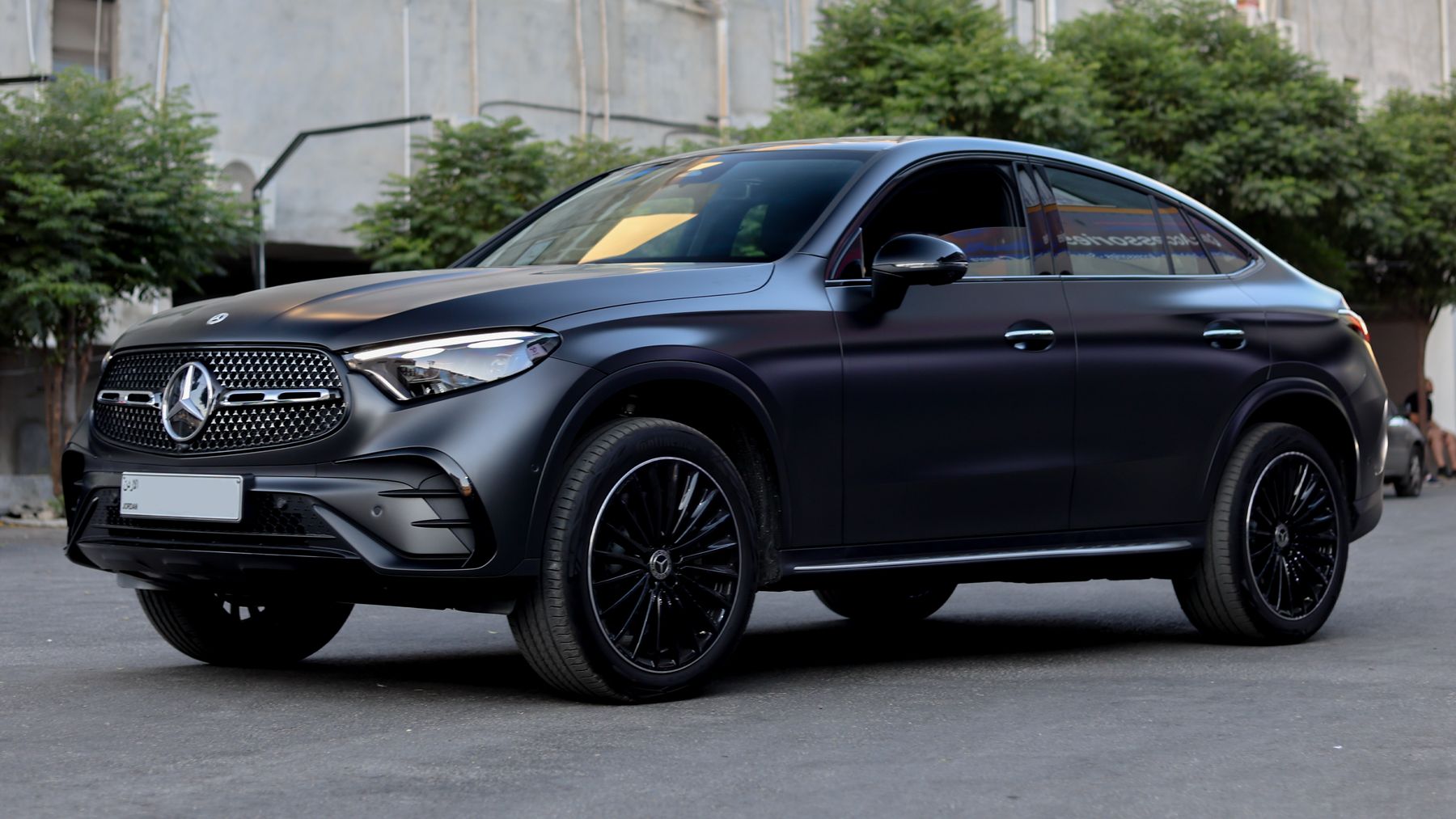
Side by side.
| Crossover | Traditional SUV | |
|---|---|---|
| Construction | Unibody, car-based | Body-on-frame, truck-based |
| Ride | Smoother, more car-like | Firmer, more truck-like |
| Fuel economy | Better | Lower |
| Towing | Typically about 1,500 to 5,000 pounds | Typically about 5,000 to 9,000 pounds or more |
| Off-road | Light trails, gravel, and snow | Rough trails and rock crawling, often with low-range 4WD |
| Seats | 5 to 7 | 5 to 9 |
| Examples | Mercedes-Benz GLC and GLE, Toyota RAV4, Honda CR-V, Lexus RX | Mercedes-Benz G-Class, Chevrolet Tahoe, Ford Expedition, Toyota 4Runner |
| Best for | Most families and daily driving | Towing, big families, serious off-road |
Why the words get mixed up.
Most vehicles sold and advertised as SUVs today are crossovers. Automakers moved nearly every SUV to a unibody platform for comfort and efficiency, and kept calling them SUVs. The body-on-frame SUVs that remain are the ones built for towing and off-road work.
When to choose a crossover.
- You mostly drive on pavement, with some snow or gravel.
- You want better fuel economy and a smoother ride.
- You tow little or nothing, or a small trailer.
When to choose a body-on-frame SUV.
- You tow a boat, camper, or large trailer.
- You go off-road on rough trails.
- You need seating for eight or nine with room behind the third row.
Quick answers.
Is a crossover an SUV?
Yes, a crossover is a type of SUV built on a car platform. The term SUV covers both crossovers and traditional body-on-frame SUVs.
Which is safer, a crossover or an SUV?
Safety depends on the specific model's design and crash-test results more than the category. Check the IIHS and NHTSA ratings for the exact vehicles you are comparing.
Crossover vs SUV fuel economy
Crossovers generally use less fuel because unibody construction is lighter and more aerodynamic than a body-on-frame design.
Crossover vs midsize SUV
Most midsize SUVs today, such as the Mercedes-Benz GLE, Lexus RX, and Toyota Highlander, are crossovers. A body-on-frame midsize SUV, such as the Toyota 4Runner, is built for towing and trails.
Can a crossover tow?
Yes, lighter loads. Many crossovers are rated to tow about 1,500 to 5,000 pounds depending on the model and equipment; check the specific rating before you hitch up.